概述 若图 G 中存在这样一条路径,使得它恰好通过 G 中每条边一次,则称该路径为 欧拉路径 。若该路径是一个环路,则称为 欧拉(Euler)回路 。
具有欧拉回路的图称称为 欧拉图 。
具有欧拉路径但不具有欧拉回路的图称为 半欧拉图 。
有关欧拉路的重要性质 无向图
一个无向图 G 存在欧拉路径当且仅当无向图 G 是连通图,且该图中有两个奇度顶点(度数为奇数)或者无奇度顶点。
当无向图 G 是包含两个奇度顶点的连通图时,G 的欧拉路径必定以这两个奇度顶点为端点。
一个无向图 G 存在欧拉回路当且仅当无向图 G 连通且不存在奇度顶点。
有向图
一个有向图 G 存在欧拉路径当且仅当 G 是弱连通的有向图(将有向边全部看成无向边后该图是连通图),且满足以下两个条件之一:
所有顶点的入度和出度相等;
有一个顶点的出度与入度之差为 1,一个顶点的出度与入度之差为 -1,其余顶点的入度和出度相等。
当有向图 G 包含两个入度和出度不相同的顶点且有欧拉路径时,欧拉路径必定以这两个入度出度不相同的顶点为端点。
一个有向图 G 存在欧拉回路当且仅当图 G 是连通的有向图,且所有顶点的入度和出度相等。
性质
图
没有奇度顶点的无向连通图
欧拉图
有且仅有两个奇度顶点的无向连通图
半欧拉图
所有顶点入度和出度相等的有向弱连通图
欧拉图
有且仅有两个顶点入度与出度不等且一个入度与出度差为 1 另一个为 -1 的有向弱连通图
半欧拉图
判断无向图的欧拉回路和欧拉路径 1 2 3 4 5 6 7 8 9 10 11 12 13 14 15 16 17 18 19 20 21 22 23 24 25 26 27 28 29 30 31 32 33 34 35 36 37 38 39 40 41 42 43 44 45 46 47 48 49 50 51 52 53 54 55 56 57 58 59 60 61 62 63 64 65 66 67 68 69 70 71 72 73 74 75 76 77 78 79 80 81 82 83 84 85 #include <iostream> #include <cstring> using namespace std ;const int N = 100 ;const int M = 10000 ;struct edge { int v, next; edge() {} edge(int _v, int _next):v(_v), next(_next) {} } E[N]; int p[N], eid;void init () memset (p, -1 , sizeof p); eid = 0 ; } void insert (int u, int v) E[eid] = edge(v, p[u]); p[u] = eid++; } void insert2 (int u, int v) insert(u, v); insert(v, u); } int cnt;bool vis[N];int n, m;int degree[N];void dfs (int u) vis[u] = true ; cnt++; for (int e = p[u]; e != -1 ; e = E[e].next) { int v = E[e].v; if (!vis[v]) { dfs(v); } } } void eulor () memset (vis, false , sizeof vis); dfs(1 ); if (cnt != n) { cout << "It doesn't have an eulor path" << endl ; return ; } int cnt_odd = 0 ; for (int i = 1 ; i <= n; i++) { if (degree[i] % 2 == 1 ) { cnt_odd++; } } if (cnt_odd == 0 ) { cout << "It has an eulor circuit!" << endl ; } else if (cnt_odd == 2 ) { cout << "It has an eulor path!" << endl ; } else { cout << "It doesn't have an euler path!" << endl ; } } int main () init(); memset (degree, 0 , sizeof degree); cin >> n >> m; int u, v; for (int i = 0 ; i < m; i++) { cin >> u >> v; insert2(u, v); degree[u]++; degree[v]++; } eulor(); return 0 ; }
判断有向图的欧拉回路和欧拉路径
我们让euler函数返回一个int类型的值表示如果存在欧拉回路或欧拉路径,起始点是哪一个,如果不存在,我们让它返回值为 0,如果是欧拉回路,我们就取点 1 作为起始点,如果是欧拉路径,我们应该取入度与出度差为 -1 的点为起始点。
为了判断方便,我们可以声明两个变量 first和last来记录入度与出度差为 -1 的点和 1 的点是哪个点,如果不存在这样的点,值为 0。
现在我们来声明euler函数,声明变量first和last,并写下循环框架,我们将会遍历每个点的入度和出度差进行判断,如果遇到一个点的入度和出度之差小于 -1 或者大于 1 了,那么该图肯定没有欧拉路径,我们进行输出并返回 0。
1 2 3 4 5 6 7 8 9 10 11 12 13 14 15 16 17 18 19 20 21 22 23 24 25 26 27 28 29 30 31 32 33 34 35 36 37 38 39 40 41 42 43 44 45 46 47 48 49 50 51 52 53 54 55 56 57 58 59 60 61 62 63 64 65 66 67 68 69 70 71 72 73 74 #include <iostream> #include <cstring> using namespace std ;const int N = 100 ;const int M = 10000 ;struct edge { int v, next; edge() {} edge(int _v, int _next): v(_v), next(_next) {} } E[N]; int p[N], eid;void init () memset (p, -1 , sizeof p); eid = 0 ; } void insert (int u, int v) E[eid] = edge(v, p[u]); p[u] = eid++; } int degree[N];int n, m;int euler () int first = 0 , last = 0 ; for (int i = 1 ; i <= n; i++) { if (degree[i] < -1 || degree[i] > 1 ) { cout << "It doesn't have an euler path!" << endl ; return 0 ; } else if (degree[i] == -1 ) { if (first != 0 ) { cout << "It doesn't have an euler path!" << endl ; return 0 ; } else { first = i; } } else if (degree[i] == 1 ) { if (last != 0 ) { cout << "It doesn't have an euler path!" << endl ; return 0 ; } else { last = i; } } } if (first == 0 && last == 0 ) { cout << "It has an euler circuit!" << endl ; return 1 ; } else if (first != 0 && last != 0 ) { cout << "It has an euler path" << endl ; return first; } } int main () init(); cin >> n >> m; int u, v; for (int i = 0 ; i < m; i++) { cin >> u >> v; insert(u, v); degree[u]--; degree[v]++; } euler(); return 0 ; }
无向图欧拉路径 计算无向图的欧拉路经可以用“套圈法”、基于深度优先搜索来实现。
从一个合适的顶点出发进行深度优先搜索。当搜到一个顶点 u 时:
如果此时没有顶点与该顶点相连,那么就将 u 加入路径中并回溯;
如果有顶点 v 与顶点 u 相连,那么就删除无向边 <u, v>,并继续搜索顶点 v 。将所有和 u 相邻的顶点遍历完之后,将 u 加入路径中。
1 2 3 4 5 6 7 8 9 10 11 12 13 14 15 16 const int MAX_N = 100 ;int mat[MAX_N][MAX_N];int match[MAX_N]; int n; void solve (int u) if (match[u] > 0 ) { for (int i = 0 ; i < n; ++i) { if (mat[u][i]) { mat[u][i]--; mat[i][u]--; solve(i); } } } }
有向图欧拉路经 计算有向图的欧拉路经同样可以用“套圈法”。和无向图唯一不同的是,在记录方案的时候将顶点编号插入栈中,并在最后将栈中的元素依次输出。也就是说,将之前输出的顺序逆置 。
1 2 3 4 5 6 7 8 9 10 11 12 13 14 15 16 17 const int MAX_N = 100 ;const int MAX_M = 10000 ;int mat[MAX_N][MAX_N];int match[MAX_N]; int n; int stk[MAX_M], top = 0 ; void solve (int u) if (match[u] > 0 ) { for (int i = 0 ; i < n; ++i) { if (mat[u][i]) { mat[u][i]--; solve(i); } } } stk[top++] = u; }
如果存在欧拉回路,”套圈法” 可以从任意点开始搜索。如果是欧拉路径,需要找到一个起点,然后再套用 “套圈法”。
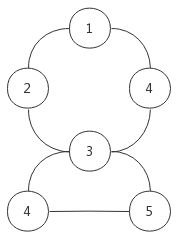
而访问一个点以后我们为什么不先输出,而是等这个点搜索完成以后再输出呢。可以看下面这个反例。如果从 11 开始搜索,先搜索 1,2,3,61,2,3,6,那么可能最后输出的路径为 1,2,3,6,1,4,5,3,而这个路径是错误的,而后输出的路径为 1,6,3,5,4,3,2,1,才是正确的欧拉回路。
例题:De Bruijin 序列 De Bruijin 序列是指这样一个序列:对于一个包含 n 个元素的字符集,生成一个仅包含 n 种字符的字符串,使得这个字符串中 $k^n$ 种长度为 k 的子串均恰好出现一次。
例如,对于 n =2,k =2,S ={0,1} 的 De Bruijin 序列,有如下满足要求的一个字符串:
解析:
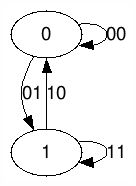
我们可以把这个问题转化为图论问题:图中的顶点代表每种长度为 k-1 的子串,每条边代表一个子串增加一个字符后的转移,如下图所示:
对于 n=2, k=2, S={0,1} 的情况,0增加一个字符0后,变成00,最后 k-1 位是0,所以从0连向0一条边00;0增加一个字符1后,变成01,最后 k-1 位是1;以此类推。
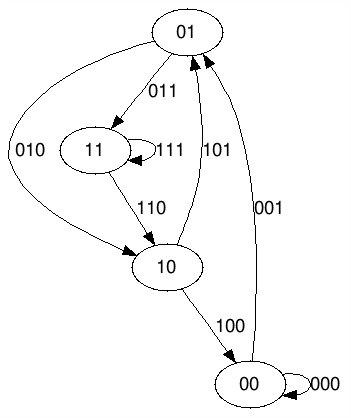
我们用 n=2,k=3,S={0,1} 来进一步理解这个建模:
图中的每条边都对应着一个长度为 k 的子串,而每走一条边,就意味着在整个字符串的最后增加一个字符。这样,图中的一个欧拉路径就对应着一个满足要求的完整字符串。例如上图中,一个欧拉路径01 11 11 10 01 10 00 00 01就对应着字符串0111010001,其中恰好包含 $2^3=8$ 种不同的子串,且每种子串刚好出现一次
有向图求欧拉路径代码
1 2 3 4 5 6 7 8 9 10 11 12 13 14 15 16 17 18 19 20 21 22 23 24 25 26 27 28 29 30 31 32 33 34 35 36 37 38 39 40 41 42 43 44 45 46 47 48 49 50 51 52 53 54 55 56 57 58 59 60 61 62 63 64 65 66 67 68 69 70 71 72 73 74 75 76 77 78 79 80 81 82 83 84 85 86 87 88 89 90 91 92 93 94 95 96 97 98 99 100 #include <iostream> #include <cstring> #include <stack> using namespace std ;const int N = 100 ;const int M = 10000 ;struct edge { int v, next; edge() {} edge(int _v, int _next): v(_v), next(_next) {} } E[M]; int p[N], eid;void init () memset (p, -1 , sizeof p); eid = 0 ; } void insert (int u, int v) E[eid] = edge(v, p[u]); p[u] = eid++; } int n, m;int degree[N];int euler () int first = 0 , last = 0 ; for (int i = 1 ; i <= n; i++) { if (degree[i] > 1 || degree[i] < -1 ) { return 0 ; } else if (degree[i] == -1 ) { if (first != 0 ) { return 0 ; } else { first = i; } } else if (degree[i] == 1 ) { if (last != 0 ) { return 0 ; } else { last = i; } } } if (first == 0 && last == 0 ) { return 1 ; } else if (first != 0 && last != 0 ) { return first; } else { return 0 ; } } stack <int > path;void dfs (int u) while (p[u] != -1 ) { int v = E[p[u]].v; p[u] = E[p[u]].next; dfs(v); } path.push(u); } bool euler_find () int start = euler(); if (start == 0 ) { return false ; } else { dfs(start); return path.size () == m + 1 ; } } int main () cin >> n >> m; int u, v; for (int i = 0 ; i < m; i++) { cin >> u >> v; insert(u, v); degree[u]--; degree[v]++; } if (!euler_find()) { cout << "It doesn't have an euler path!" << endl ; } else { while (!path.empty()) { cout << path.top() << endl ; path.pop(); } } return 0 ; }